

Administration options

Find out how VYVGART Hytrulo for subcutaneous injection and VYVGART for intravenous infusion are dosed and how they can provide 3 administration options for your adult patients with gMG.1,2


gMG=generalized myasthenia gravis.

VYVGART Hytrulo and VYVGART: 3 administration options to use at home, in office, or at an infusion center1,2

Recommended dose and dose schedules from Prescribing Information:

Administer subsequent treatment cycles based on clinical evaluation.1,2

The actual SC injection and IV infusion times do not account for preparation and monitoring time. Monitor for clinical signs and symptoms of hypersensitivity reactions for at least 30 minutes after VYVGART Hytrulo administration or during and for 1 hour after VYVGART administration. If a hypersensitivity reaction occurs during VYVGART Hytrulo SC injection, the HCP should institute appropriate measures if needed, or the patient should seek medical attention. If a hypersensitivity reaction occurs during administration of VYVGART for IV infusion, discontinue administration and institute appropriate supportive measures.1,2

Not actual size.
1 treatment cycle=1 dose per week for 4 weeks.1

*After proper instruction on SC injection technique, a patient or caregiver may inject VYVGART Hytrulo prefilled syringe. See Prescribing Information.2

HCP=healthcare professional; IV=intravenous; PFS=prefilled syringe; SC=subcutaneous.

Plan treatment schedules for patients on VYVGART Hytrulo or VYVGART for IV infusion

VYVGART Hytrulo single-dose prefilled syringe2

Administered by a patient or caregiver2*

100% of patients with gMG and caregivers successfully used the prefilled syringe and interacted with the associated labeling, packaging, and instructional materials across 2 human factors studies (15 patients and 15 caregivers of gMG patients). All participants were able to follow the Instructions for Use and prepare and administer the dose into the simulated injection pad unaided.6,7†


Patients and/or caregivers will receive in-person injection training until ready to inject.*

Prefilled syringe for SC injection2

Fast, ~20-30–second self-injection2
(1,000 mg efgartigimod alfa/10,000 units hyaluronidase, fixed dose)

The actual injection time does not account for preparation and monitoring time. Monitor for clinical signs and symptoms of hypersensitivity reactions for at least 30 minutes after administration. If a hypersensitivity reaction occurs, the patient should seek medical attention, and the healthcare professional should institute appropriate measures, if needed.2

The recommended dose of VYVGART Hytrulo prefilled syringe is 1,000 mg/10,000 units (1,000 mg efgartigimod alfa/10,000 units hyaluronidase), given in treatment cycles of once-weekly SC injections for 4 weeks.

Administer subsequent treatment cycles based on clinical evaluation.1,2

After proper instruction on SC injection technique, a patient or caregiver may inject VYVGART Hytrulo prefilled syringe. See Prescribing Information.2

Human factors studies evaluated participants’ ability to follow injection instructions and successfully prepare the product in a simulated-use environment. ​During the unaided injection, 2 use errors and one close call occurred. The use errors were participants not putting the product back into the original packaging before putting it into the refrigerator, and the close call was a participant removing the needle cap at the incorrect time. ​Performance of critical tasks did not result in any patterns of use errors, close calls, or difficulties that would lead to patient harm (including compromised medical care). ​Findings were based on performance, observed behaviors, subjective feedback, and human factors analyses, and therefore were not traditionally statistically analyzed.3
FAQ=frequently asked question; gMG=generalized myasthenia gravis; PFS=prefilled syringe; SC=subcutaneous.

Discover administration guidance on prefilled syringe for self-injection

Learn how patients will store, prepare, and administer VYVGART Hytrulo prefilled syringe for self-injection.

VYVGART Hytrulo single-dose vial2

HCP administered in office or at an infusion center2

SC injection2

~30-90–second SC injection2*
(1,008 mg efgartigimod alfa/11,200 units hyaluronidase, fixed dose)

The actual injection time does not account for preparation and monitoring time. HCPs should monitor for clinical signs and symptoms of hypersensitivity reactions for at least 30 minutes after administration. If a hypersensitivity reaction occurs, the HCP should institute appropriate measures if needed or the patient should seek medical attention.2

The recommended dose of VYVGART Hytrulo vial is 1,008 mg/11,200 units (1,008 mg efgartigimod alfa/11,200 units hyaluronidase) given in treatment cycles of once-weekly SC injections for 4 weeks.

Administer subsequent treatment cycles based on clinical evaluation.1,2

gMG=generalized myasthenia gravis; HCP=healthcare professional; SC=subcutaneous.

VYVGART single-dose vial1

HCP administered at an infusion center1

IV infusion1

1-hour IV infusion1*

(10 mg efgartigimod alfa-fcab/kg, weight based)

The actual infusion time does not account for preparation and monitoring time. Monitor patients during administration and for 1 hour thereafter for clinical signs and symptoms of hypersensitivity reactions. If a hypersensitivity reaction occurs during administration, discontinue administration of VYVGART and institute appropriate supportive measures.1

The recommended dose of VYVGART (efgartigimod alfa-fcab) is 10 mg/kg, given in treatment cycles of once-weekly, 1-hour IV infusions for 4 weeks.1

Administer subsequent treatment cycles based on clinical evaluation.1,2

*In patients weighing 265 lb (120 kg) or more, the recommended dose of VYVGART is 1,200 mg (3 vials) per infusion.1
gMG=generalized myasthenia gravis; HCP=healthcare professional; IV=intravenous.

Options that can fit into your patients’ lives at home, in your office, or at an 
infusion center1,2

VYVGART Hytrulo 
single-dose prefilled syringe2

VYVGART Hytrulo 
single-dose vial2

VYVGART 
single-dose vial1

SC injection with a prefilled syringe2

SC injection
with a winged infusion set2

IV infusion1

Administered by patient or caregiver at home2*

HCP administered in office or at an infusion center

HCP administered at an infusion center


~20-30–second sc self-injection 
per week for 4 weeks2


~30-90–second SC injection
 per week for 4 weeks

1-hour IV infusion 
 
per week for 4 weeks‡§

Monitor for clinical signs and symptoms of hypersensitivity reactions for at least 30 minutes after administration.2

Monitor for clinical signs and symptoms of hypersensitivity reactions for at least 30 minutes after administration.2

Monitor for clinical signs and symptoms of hypersensitivity reactions during and for 1 hour after administration.1

The recommended dose of 
VYVGART Hytrulo prefilled syringe
is 1,000 mg/10,000 units (1,000 mg efgartigimod alfa/10,000 units hyaluronidase) given in treatment cycles of once-weekly SC 
injections for 4 weeks.

The recommended dose of VYVGART Hytrulo vial is 1,008 mg/11,200 units (1,008 mg efgartigimod alfa/11,200 units hyaluronidase) given in treatment cycles of once-weekly SC 
injections for 4 weeks.

The recommended dose of VYVGART (efgartigimod alfa-fcab) is 10 mg/kg, given in treatment cycles of once-weekly, 1-hour IV infusions for 4 weeks.

VYVGART Hytrulo
single-dose prefilled syringe2

Subcutaneous injection with a prefilled syringe2

Administered by patient or caregiver at home2*

~20-30–second SC self-injection 
(actual injection time)
 
per week for 4 weeks2

Monitor for clinical signs and symptoms of hypersensitivity reactions for at least 30 minutes after administration2

The recommended dose of 
VYVGART Hytrulo prefilled syringe
is 1,000 mg efgartigimod alfa/10,000 units hyaluronidase, fixed dose, given in treatment cycles of once-weekly SC 
injections for 4 weeks.2

Administer subsequent treatment cycles based on clinical evaluation.2

VYVGART Hytrulo
single-dose vial2

Subcutaneous injection with a winged infusion set2

HCP administered in office or at an infusion center2

~30-90–second SC injection 
(actual injection time)
 
per week for 4 weeks2

Monitor for clinical signs and symptoms of hypersensitivity reactions for at least 30 minutes after administration2

The recommended dose of VYVGART Hytrulo vial is 1,008 mg efgartigimod alfa/11,200 units hyaluronidase, fixed dose, given in treatment cycles of once-weekly SC injections for 4 weeks.2

Administer subsequent treatment cycles based on clinical evaluation.2

VYVGART
single-dose vial1

Intravenous infusion1

HCP administered at an
infusion center1

1-hour IV infusion
(actual infusion time)
per week for 4 weeks1

Monitor for clinical signs and symptoms of hypersensitivity reactions during and for 1 hour after administration1

The recommended dose of VYVGART vial is 10 mg efgartigimod alfa-fcab/kg, weight based, given in treatment cycles of once-weekly, 1-hour IV infusions for 4 weeks.1†‡§

Administer subsequent treatment cycles based on clinical evaluation.1

Have questions about at-home injections with the VYVGART Hytrulo prefilled syringe (PFS)?

 Not actual size.

*After proper instruction on SC injection technique, a patient or caregiver may inject VYVGART Hytrulo prefilled syringe. See Prescribing Information.2

In patients weighing 265 lb (120 kg) or more, the recommended dose of VYVGART is 1,200 mg (3 vials) per infusion.1

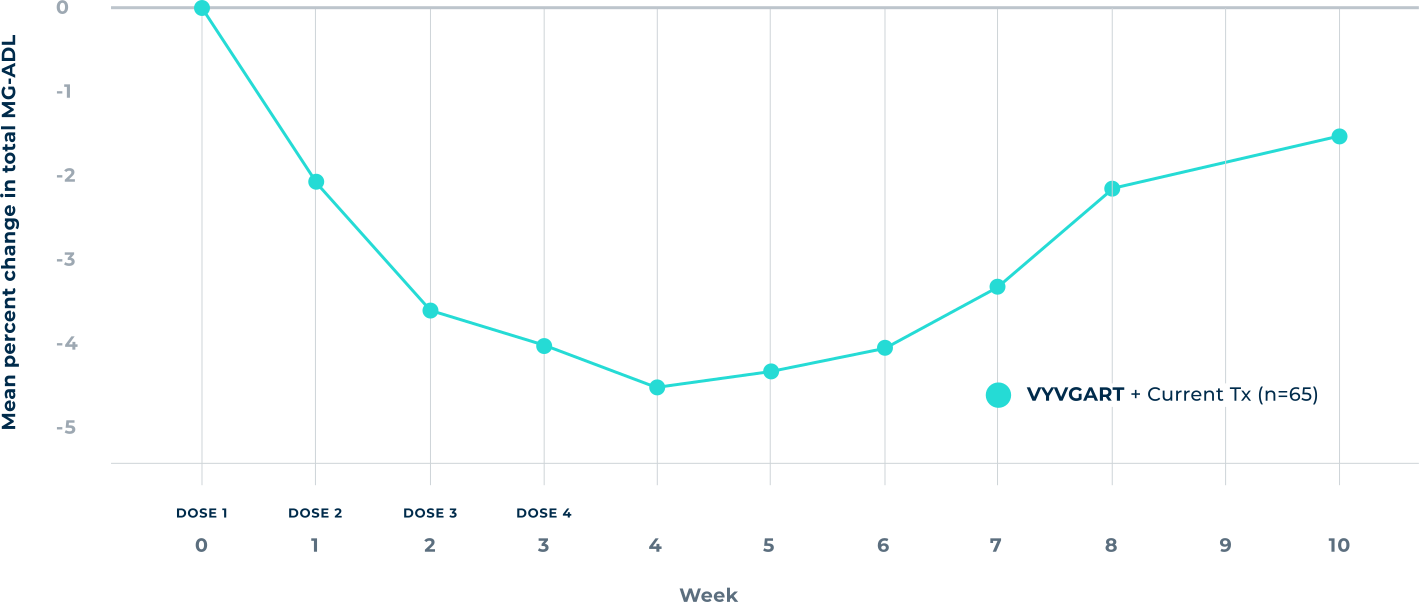
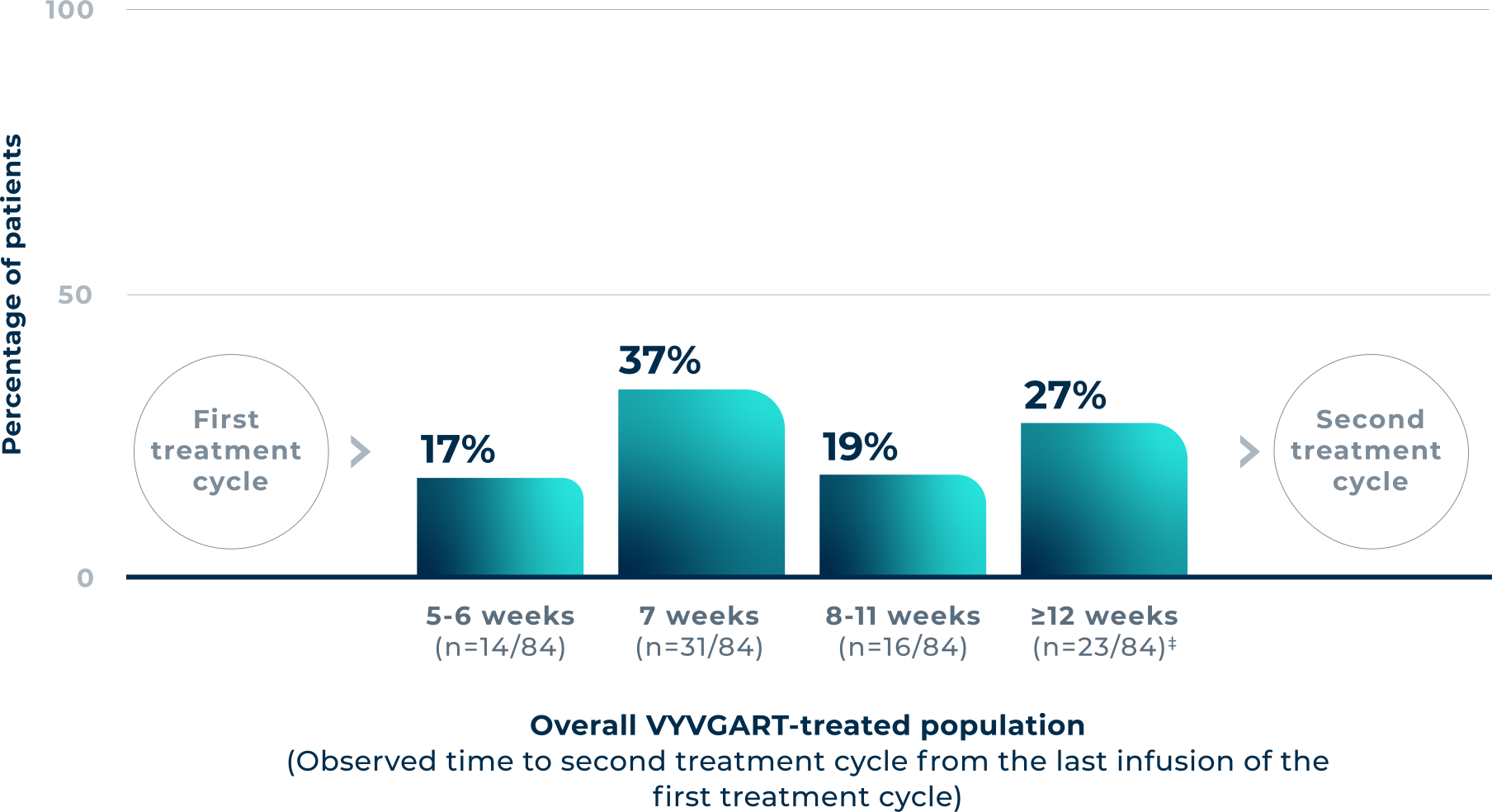
In the ADAPT Phase 3 clinical trial, all patients received an initial cycle, with subsequent cycles administered based on individual clinical evaluation when their MG-ADL total score was at least 5 (with >50% MG-ADL nonocular) and if the patient was an MG-ADL responder, when they no longer had a clinically meaningful decrease (defined as having a ≥2-point improvement in MG-ADL total score) compared with baseline.1,5

§The minimum time to initiate a subsequent cycle, specified by study protocol, was 28 days from the last administration of the previous treatment cycle. A maximum of 3 cycles were possible in the 26-week study.1,5

 FAQ=frequently asked question; HCP=healthcare professional; IV=intravenous; MG-ADL=Myasthenia Gravis Activities of Daily Living; SC=subcutaneous.

Find out more about VYVGART Hytrulo and VYVGART

Have questions about access and co-pay coverage? 

Want to start your patients on VYVGART Hytrulo or VYVGART?

IMPORTANT SAFETY INFORMATION AND INDICATION

CONTRAINDICATIONS

VYVGART HYTRULO is contraindicated in patients with serious hypersensitivity to efgartigimod alfa products, to hyaluronidase, or to any of the excipients of VYVGART HYTRULO. Reactions have included anaphylaxis and hypotension leading to syncope. 

WARNINGS AND PRECAUTIONS
Infections

VYVGART HYTRULO may increase the risk of infection. The most common infections observed in Study 1 were urinary tract infection (10% of efgartigimod alfa-fcab-treated patients vs 5% of placebo-treated patients) and respiratory tract infections (33% of efgartigimod alfa-fcab-treated patients vs 29% of placebo-treated patients). Patients on efgartigimod alfa-fcab vs placebo had below normal levels for white blood cell counts (12% vs 5%, respectively), lymphocyte counts (28% vs 19%, respectively), and neutrophil counts (13% vs 6%, respectively). The majority of infections and hematologic abnormalities were mild to moderate in severity. Delay VYVGART HYTRULO administration in patients with an active infection until the infection has resolved; monitor for clinical signs and symptoms of infections. If serious infection occurs, administer appropriate treatment and consider withholding VYVGART HYTRULO until the infection has resolved.

Immunization

Evaluate the need to administer age-appropriate vaccines according to immunization guidelines before initiation of a new treatment cycle with VYVGART HYTRULO. The safety of immunization with live vaccines and the immune response to vaccination during treatment with VYVGART HYTRULO are unknown. Because VYVGART HYTRULO causes a reduction in immunoglobulin G (IgG) levels, vaccination with live vaccines is not recommended during treatment with VYVGART HYTRULO.

Hypersensitivity Reactions

In clinical trials, hypersensitivity reactions, including rash, angioedema, and dyspnea were observed in patients treated with VYVGART HYTRULO or intravenous efgartigimod alfa-fcab. Urticaria was also observed in patients treated with VYVGART HYTRULO. Hypersensitivity reactions were mild or moderate, occurred within 1 hour to 3 weeks of administration. Anaphylaxis and hypotension leading to syncope have been reported in postmarketing experience with intravenous efgartigimod alfa-fcab. Anaphylaxis and hypotension occurred during or within an hour of administration and led to infusion discontinuation and in some cases to permanent treatment discontinuation. Monitor for clinical signs and symptoms of hypersensitivity reactions for at least 30 minutes after administration. If a hypersensitivity reaction occurs, the healthcare professional should institute appropriate measures if needed or the patient should seek medical attention.

Infusion/Injection-Related Reactions 

Infusion-related reactions have been reported with intravenous efgartigimod alfa-fcab in postmarketing experience. The most frequent symptoms and signs were hypertension, chills, shivering, and thoracic, abdominal, and back pain. Infusion-related reactions occurred during or within an hour of administration and led to infusion discontinuation. If a severe infusion/injection-related reaction occurs, initiate appropriate therapy. Consider the risks and benefits of readministering VYVGART HYTRULO following a severe infusion/injection-related reaction. If a mild to moderate infusion/injection-related reaction occurs, patients may be rechallenged with close clinical observation, slower infusion/injection rates, and pre-medications.

ADVERSE REACTIONS

Patients with gMG: In Study 1, the most common (≥10%) adverse reactions in efgartigimod alfa-fcab-treated patients were respiratory tract infection, headache, and urinary tract infection. In Study 2, the overall safety profile was consistent with the known safety profile of efgartigimod alfa-fcab in patients with gMG, except for nausea, which occurred in 7% of anti-acetylcholine receptor (AChR) antibody negative patients who received efgartigimod alfa-fcab compared to 5% of patients who received placebo. In Study 3, the most common (≥10%) adverse reactions in VYVGART HYTRULO- treated patients were injection site reactions and headache. Injection site reactions occurred in 38% of VYVGART HYTRULO-treated patients, including injection site rash, erythema, pruritus, bruising, pain, and urticaria. In Study 3 and its open-label extension, all injection site reactions were mild to moderate in severity and did not lead to treatment discontinuation. The majority occurred within 24 hours after administration and resolved spontaneously. Most injection site reactions occurred during the first treatment cycle, and the incidence decreased with each subsequent cycle.

Patients with CIDP: In Study 4 stage B, the overall safety profile observed in patients with CIDP treated with VYVGART HYTRULO was consistent with the known safety profile of VYVGART HYTRULO and of efgartigimod alfa-fcab administered intravenously. In Study 4, injection site reactions occurred in 15% of patients treated with VYVGART HYTRULO compared to 6% of patients who received placebo. The most common of these injection site reactions were injection site bruising and injection site erythema. All injection site reactions were mild to moderate in severity. Most injection site reactions occurred during the first 3 months of treatment.

USE IN SPECIFIC POPULATIONS
Pregnancy
As VYVGART HYTRULO is expected to reduce maternal IgG antibody levels, reduction in passive protection to the newborn is anticipated. Risk and benefits should be considered prior to administering live vaccines to infants exposed to VYVGART HYTRULO in utero.


Lactation
There is no information regarding the presence of efgartigimod alfa or hyaluronidase, from administration of VYVGART HYTRULO, in human milk, the effects on the breastfed infant, or the effects on milk production. Maternal IgG is known to be present in human milk. The developmental and health benefits of breastfeeding should be considered along with the mother’s clinical need for VYVGART HYTRULO and any potential adverse effects on the breastfed infant from VYVGART HYTRULO or from the underlying maternal condition.


INDICATION
VYVGART HYTRULO® (efgartigimod alfa and hyaluronidase-qvfc) is indicated for the treatment of adult patients with:

  • generalized myasthenia gravis (gMG)
  • chronic inflammatory demyelinating polyneuropathy (CIDP)


Please see the full Prescribing Information.

You may report side effects to the US Food and Drug Administration by visiting http://www.fda.gov/medwatch or calling 1-800-FDA-1088. You may also report side effects to argenx US, Inc, at 1-833-argx411 (1-833-274-9411).

Dosage Forms and Strengths: VYVGART Hytrulo is available as a single-dose subcutaneous injection containing: 200 mg/mL of efgartigimod alfa and 2,000 U/mL of hyaluronidase per prefilled syringe, or 180 mg/mL of efgartigimod alfa and 2,000 U/mL of hyaluronidase per vial.

IMPORTANT SAFETY INFORMATION AND INDICATION
CONTRAINDICATIONS

VYVGART is contraindicated in patients with serious hypersensitivity to efgartigimod alfa products or to any of the excipients of VYVGART. Reactions have included anaphylaxis and hypotension leading to syncope.

WARNINGS AND PRECAUTIONS
Infection

VYVGART may increase the risk of infection. The most common infections observed in Study 1 were urinary tract infection (10% for VYVGART vs 5% for placebo) and respiratory tract infections (33% for VYVGART vs 29% for placebo). Patients on VYVGART vs placebo had below normal levels for white blood cell counts (12% vs 5%, respectively), lymphocyte counts (28% vs 19%, respectively), and neutrophil counts (13% vs 6%, respectively). The majority of infections and hematologic abnormalities were mild to moderate in severity. Delay VYVGART administration in patients with an active infection until the infection has resolved; monitor for clinical signs and symptoms of infections. If serious infection occurs, administer appropriate treatment and consider withholding VYVGART until the infection has resolved.

Immunization

Evaluate the need to administer age-appropriate vaccines according to immunization guidelines before initiation of a new treatment cycle with VYVGART. The safety of immunization with live vaccines and the immune response to vaccination during treatment with VYVGART are unknown. Because VYVGART causes a reduction in immunoglobulin G (IgG) levels, vaccination with live vaccines is not recommended during treatment with VYVGART.

Hypersensitivity Reactions

In clinical trials, hypersensitivity reactions, including rash, angioedema, and dyspnea were observed in VYVGART-treated patients. Hypersensitivity reactions were mild or moderate, occurred within 1 hour to 3 weeks of administration, and did not lead to treatment discontinuation. Anaphylaxis and hypotension leading to syncope have been reported in postmarketing experience with VYVGART. Anaphylaxis and hypotension occurred during or within an hour of administration and led to infusion discontinuation and in some cases to permanent treatment discontinuation. Monitor patients during administration and for 1 hour thereafter for clinical signs and symptoms of hypersensitivity reactions. If a hypersensitivity reaction occurs, the healthcare professional should institute appropriate measures if needed or the patient should seek medical attention.

Infusion-Related Reactions

Infusion-related reactions have been reported with VYVGART in postmarketing experience. The most frequent symptoms and signs were hypertension, chills, shivering, and thoracic, abdominal, and back pain. Infusion-related reactions occurred during or within an hour of administration and led to infusion discontinuation. If a severe infusion-related reaction occurs during administration, discontinue VYVGART infusion and initiate appropriate therapy. Consider the risks and benefits of readministering VYVGART following a severe infusion-related reaction. If a mild to moderate infusion-related reaction occurs, patients may be rechallenged with close clinical observation, slower infusion rates, and pre-medications.

ADVERSE REACTIONS

In Study 1, the most common (≥10%) adverse reactions with VYVGART-treated patients were respiratory tract infection, headache, and urinary tract infection. In Study 2, the overall safety profile was consistent with the known safety profile of VYVGART in patients with gMG, except for nausea, which occurred in 7% of anti-acetylcholine receptor (AChR) antibody negative patients who received VYVGART compared to 5% of patients who received placebo.

USE IN SPECIFIC POPULATIONS
Pregnancy

As VYVGART is expected to reduce maternal IgG antibody levels, reduction in passive protection to the newborn is anticipated. Risk and benefits should be considered prior to administering live vaccines to infants exposed to VYVGART in utero.

Lactation

There is no information regarding the presence of efgartigimod alfa-fcab in human milk, the effects on the breastfed infant, or the effects on milk production. Maternal IgG is known to be present in human milk. The developmental and health benefits of breastfeeding should be considered along with the mother’s clinical need for VYVGART and any potential adverse effects on the breastfed infant from VYVGART or from the underlying maternal condition.

INDICATION

VYVGART® (efgartigimod alfa-fcab) is indicated for the treatment of adult patients with generalized myasthenia gravis (gMG).

Please see the full Prescribing Information.

You may report side effects to the US Food and Drug Administration by visiting http://www.fda.gov/medwatch or calling 1-800-FDA-1088. You may also report side effects to argenx US, Inc, at 1-833-argx411 (1-833-274-9411).

Dosage Form and Strength: VYVGART is available as a single-dose injection for intravenous use containing 400 mg/20 mL of efgartigimod alfa-fcab per vial.

IMPORTANT SAFETY INFORMATION AND INDICATION

CONTRAINDICATIONS

VYVGART HYTRULO is contraindicated in patients with serious hypersensitivity to efgartigimod alfa products, to hyaluronidase, or to any of the excipients of VYVGART HYTRULO. Reactions have included anaphylaxis and hypotension leading to syncope. 

WARNINGS AND PRECAUTIONS
Infections

VYVGART HYTRULO may increase the risk of infection. The most common infections observed in Study 1 were urinary tract infection (10% of efgartigimod alfa-fcab-treated patients vs 5% of placebo-treated patients) and respiratory tract infections (33% of efgartigimod alfa-fcab-treated patients vs 29% of placebo-treated patients). Patients on efgartigimod alfa-fcab vs placebo had below normal levels for white blood cell counts (12% vs 5%, respectively), lymphocyte counts (28% vs 19%, respectively), and neutrophil counts (13% vs 6%, respectively). The majority of infections and hematologic abnormalities were mild to moderate in severity. Delay VYVGART HYTRULO administration in patients with an active infection until the infection has resolved; monitor for clinical signs and symptoms of infections. If serious infection occurs, administer appropriate treatment and consider withholding VYVGART HYTRULO until the infection has resolved.

Immunization

Evaluate the need to administer age-appropriate vaccines according to immunization guidelines before initiation of a new treatment cycle with VYVGART HYTRULO. The safety of immunization with live vaccines and the immune response to vaccination during treatment with VYVGART HYTRULO are unknown. Because VYVGART HYTRULO causes a reduction in immunoglobulin G (IgG) levels, vaccination with live vaccines is not recommended during treatment with VYVGART HYTRULO.

Hypersensitivity Reactions

In clinical trials, hypersensitivity reactions, including rash, angioedema, and dyspnea were observed in patients treated with VYVGART HYTRULO or intravenous efgartigimod alfa-fcab. Urticaria was also observed in patients treated with VYVGART HYTRULO. Hypersensitivity reactions were mild or moderate, occurred within 1 hour to 3 weeks of administration. Anaphylaxis and hypotension leading to syncope have been reported in postmarketing experience with intravenous efgartigimod alfa-fcab. Anaphylaxis and hypotension occurred during or within an hour of administration and led to infusion discontinuation and in some cases to permanent treatment discontinuation. Monitor for clinical signs and symptoms of hypersensitivity reactions for at least 30 minutes after administration. If a hypersensitivity reaction occurs, the healthcare professional should institute appropriate measures if needed or the patient should seek medical attention.

Infusion/Injection-Related Reactions 

Infusion-related reactions have been reported with intravenous efgartigimod alfa-fcab in postmarketing experience. The most frequent symptoms and signs were hypertension, chills, shivering, and thoracic, abdominal, and back pain. Infusion-related reactions occurred during or within an hour of administration and led to infusion discontinuation. If a severe infusion/injection-related reaction occurs, initiate appropriate therapy. Consider the risks and benefits of readministering VYVGART HYTRULO following a severe infusion/injection-related reaction. If a mild to moderate infusion/injection-related reaction occurs, patients may be rechallenged with close clinical observation, slower infusion/injection rates, and pre-medications.

ADVERSE REACTIONS

Patients with gMG: In Study 1, the most common (≥10%) adverse reactions in efgartigimod alfa-fcab-treated patients were respiratory tract infection, headache, and urinary tract infection. In Study 2, the overall safety profile was consistent with the known safety profile of efgartigimod alfa-fcab in patients with gMG, except for nausea, which occurred in 7% of anti-acetylcholine receptor (AChR) antibody negative patients who received efgartigimod alfa-fcab compared to 5% of patients who received placebo. In Study 3, the most common (≥10%) adverse reactions in VYVGART HYTRULO- treated patients were injection site reactions and headache. Injection site reactions occurred in 38% of VYVGART HYTRULO-treated patients, including injection site rash, erythema, pruritus, bruising, pain, and urticaria. In Study 3 and its open-label extension, all injection site reactions were mild to moderate in severity and did not lead to treatment discontinuation. The majority occurred within 24 hours after administration and resolved spontaneously. Most injection site reactions occurred during the first treatment cycle, and the incidence decreased with each subsequent cycle.

Patients with CIDP: In Study 4 stage B, the overall safety profile observed in patients with CIDP treated with VYVGART HYTRULO was consistent with the known safety profile of VYVGART HYTRULO and of efgartigimod alfa-fcab administered intravenously. In Study 4, injection site reactions occurred in 15% of patients treated with VYVGART HYTRULO compared to 6% of patients who received placebo. The most common of these injection site reactions were injection site bruising and injection site erythema. All injection site reactions were mild to moderate in severity. Most injection site reactions occurred during the first 3 months of treatment.

USE IN SPECIFIC POPULATIONS
Pregnancy
As VYVGART HYTRULO is expected to reduce maternal IgG antibody levels, reduction in passive protection to the newborn is anticipated. Risk and benefits should be considered prior to administering live vaccines to infants exposed to VYVGART HYTRULO in utero.


Lactation
There is no information regarding the presence of efgartigimod alfa or hyaluronidase, from administration of VYVGART HYTRULO, in human milk, the effects on the breastfed infant, or the effects on milk production. Maternal IgG is known to be present in human milk. The developmental and health benefits of breastfeeding should be considered along with the mother’s clinical need for VYVGART HYTRULO and any potential adverse effects on the breastfed infant from VYVGART HYTRULO or from the underlying maternal condition.


INDICATION
VYVGART HYTRULO® (efgartigimod alfa and hyaluronidase-qvfc) is indicated for the treatment of adult patients with:

  • generalized myasthenia gravis (gMG)
  • chronic inflammatory demyelinating polyneuropathy (CIDP)


Please see the full Prescribing Information.

You may report side effects to the US Food and Drug Administration by visiting http://www.fda.gov/medwatch or calling 1-800-FDA-1088. You may also report side effects to argenx US, Inc, at 1-833-argx411 (1-833-274-9411).

Dosage Forms and Strengths: VYVGART Hytrulo is available as a single-dose subcutaneous injection containing: 200 mg/mL of efgartigimod alfa and 2,000 U/mL of hyaluronidase per prefilled syringe, or 180 mg/mL of efgartigimod alfa and 2,000 U/mL of hyaluronidase per vial.

IMPORTANT SAFETY INFORMATION AND INDICATION

CONTRAINDICATIONS

VYVGART is contraindicated in patients with serious hypersensitivity to efgartigimod alfa products or to any of the excipients of VYVGART. Reactions have included anaphylaxis and hypotension leading to syncope.

WARNINGS AND PRECAUTIONS
Infection

VYVGART may increase the risk of infection. The most common infections observed in Study 1 were urinary tract infection (10% for VYVGART vs 5% for placebo) and respiratory tract infections (33% for VYVGART vs 29% for placebo). Patients on VYVGART vs placebo had below normal levels for white blood cell counts (12% vs 5%, respectively), lymphocyte counts (28% vs 19%, respectively), and neutrophil counts (13% vs 6%, respectively). The majority of infections and hematologic abnormalities were mild to moderate in severity. Delay VYVGART administration in patients with an active infection until the infection has resolved; monitor for clinical signs and symptoms of infections. If serious infection occurs, administer appropriate treatment and consider withholding VYVGART until the infection has resolved.

Immunization

Evaluate the need to administer age-appropriate vaccines according to immunization guidelines before initiation of a new treatment cycle with VYVGART. The safety of immunization with live vaccines and the immune response to vaccination during treatment with VYVGART are unknown. Because VYVGART causes a reduction in immunoglobulin G (IgG) levels, vaccination with live vaccines is not recommended during treatment with VYVGART.

Hypersensitivity Reactions

In clinical trials, hypersensitivity reactions, including rash, angioedema, and dyspnea were observed in VYVGART-treated patients. Hypersensitivity reactions were mild or moderate, occurred within 1 hour to 3 weeks of administration, and did not lead to treatment discontinuation. Anaphylaxis and hypotension leading to syncope have been reported in postmarketing experience with VYVGART. Anaphylaxis and hypotension occurred during or within an hour of administration and led to infusion discontinuation and in some cases to permanent treatment discontinuation. Monitor patients during administration and for 1 hour thereafter for clinical signs and symptoms of hypersensitivity reactions. If a hypersensitivity reaction occurs, the healthcare professional should institute appropriate measures if needed or the patient should seek medical attention.

Infusion-Related Reactions

Infusion-related reactions have been reported with VYVGART in postmarketing experience. The most frequent symptoms and signs were hypertension, chills, shivering, and thoracic, abdominal, and back pain. Infusion-related reactions occurred during or within an hour of administration and led to infusion discontinuation. If a severe infusion-related reaction occurs during administration, discontinue VYVGART infusion and initiate appropriate therapy. Consider the risks and benefits of readministering VYVGART following a severe infusion-related reaction. If a mild to moderate infusion-related reaction occurs, patients may be rechallenged with close clinical observation, slower infusion rates, and pre-medications.

ADVERSE REACTIONS

In Study 1, the most common (≥10%) adverse reactions with VYVGART-treated patients were respiratory tract infection, headache, and urinary tract infection. In Study 2, the overall safety profile was consistent with the known safety profile of VYVGART in patients with gMG, except for nausea, which occurred in 7% of anti-acetylcholine receptor (AChR) antibody negative patients who received VYVGART compared to 5% of patients who received placebo.

USE IN SPECIFIC POPULATIONS
Pregnancy

As VYVGART is expected to reduce maternal IgG antibody levels, reduction in passive protection to the newborn is anticipated. Risk and benefits should be considered prior to administering live vaccines to infants exposed to VYVGART in utero.

Lactation

There is no information regarding the presence of efgartigimod alfa-fcab in human milk, the effects on the breastfed infant, or the effects on milk production. Maternal IgG is known to be present in human milk. The developmental and health benefits of breastfeeding should be considered along with the mother’s clinical need for VYVGART and any potential adverse effects on the breastfed infant from VYVGART or from the underlying maternal condition.

INDICATION

VYVGART® (efgartigimod alfa-fcab) is indicated for the treatment of adult patients with generalized myasthenia gravis (gMG).

Please see the full Prescribing Information.

You may report side effects to the US Food and Drug Administration by visiting http://www.fda.gov/medwatch or calling 1-800-FDA-1088. You may also report side effects to argenx US, Inc, at 1-833-argx411 (1-833-274-9411).

Dosage Form and Strength: VYVGART is available as a single-dose injection for intravenous use containing 400 mg/20 mL of efgartigimod alfa-fcab per vial.

References: 1. VYVGART. Prescribing information. argenx US Inc; 2026. 2. VYVGART Hytrulo. Prescribing information. argenx US Inc; 2026. 3. Data on file. REF-03778. argenx US Inc. January 2026. 4. Hargraves T et al. Poster presented at: American Academy of Neurology (AAN) Annual Meeting; April 5-9, 2025. San Diego, CA. 5. Howard JF Jr et al. Lancet Neurol. 2021;20(7):526-536. doi:10.1016/S1474-4422(21)00159-9